

Twenty-one years is a long time in electronic music. Long enough for entire genres to be born, become fashionable, get rinsed to death, disappear, and eventually return wearing a more expensive jacket. Long enough for production techniques once considered futuristic to become presets, and surely enough for a record to reveal whether it actually has something to say.
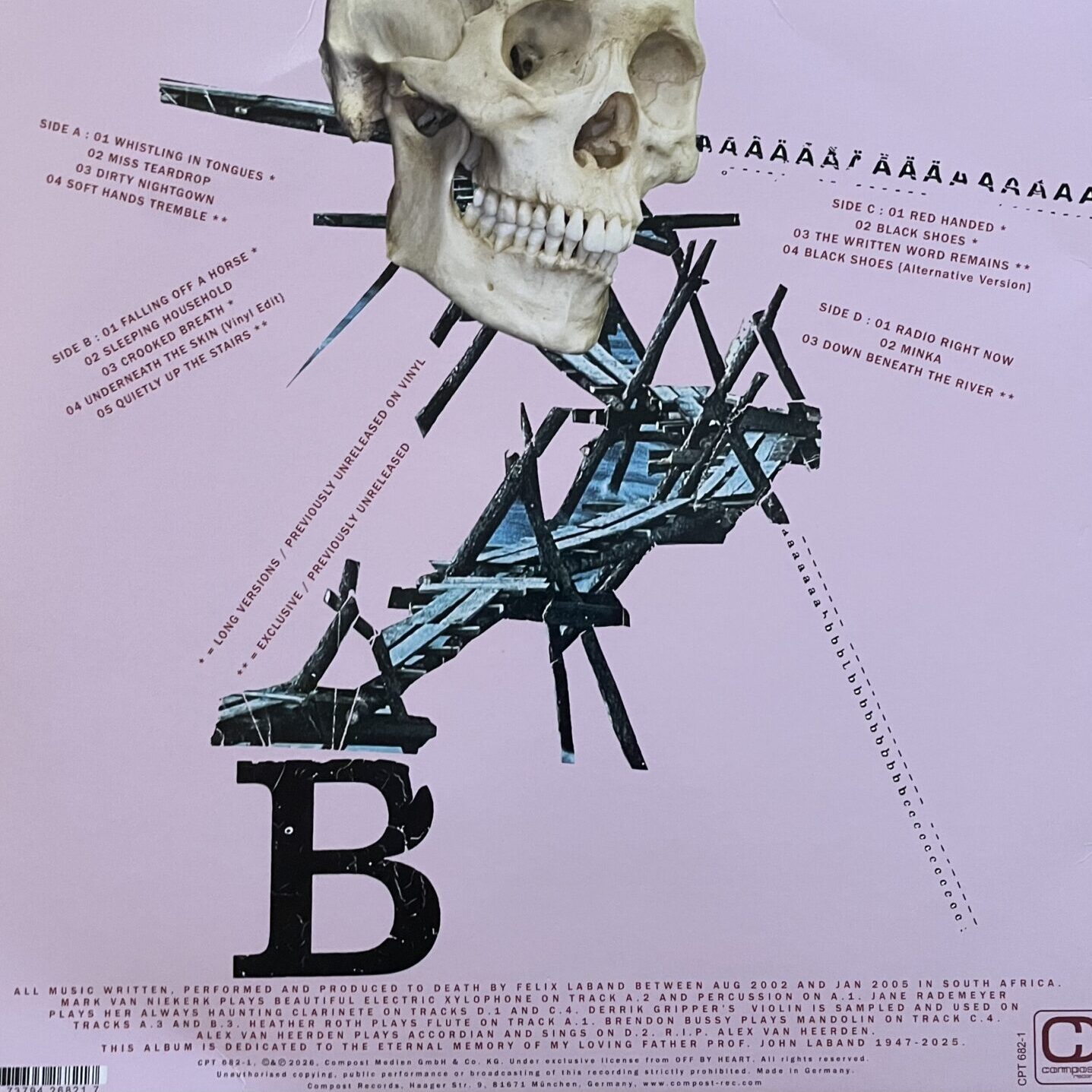
Originally released in 2005, this remarkable album returns, once again through Compost Records, in an Extended Version that feels less like a celebration and more like the continuation of a conversation. That's probably the first thing worth saying about this record: it doesn't sound particularly interested in ageing, and that is because it belongs to a very special category of works: one that’s very hard to categorise… There is a certain irony in revisiting a record called Dark Days Exit more than two decades later. The world doesn't exactly seem to be running out of dark days, does it? Yet the album's relationship with darkness is never straightforward. There's humour in it, tenderness, an almost childish curiosity, and a rather unsettling ability to make beautiful things sound vaguely dangerous. DDE smiles at you while quietly moving the furniture around inside your head! Or at least, that’s the feeling I get listening to it. This album also belongs to a particular South African moment. Created in the decade following apartheid, it carries something of the psychological complexity of a country learning to live with its own history while attempting to go forward. Not that Felix Laband offers political slogans or easy interpretations. And speaking of South Africa, here's a slightly ridiculous comparison that, the more I think about it, isn't that ridiculous… When Dark Days Exit first appears in 2005, the Springboks have one Rugby World Cup to their name. Since then, they add three more, including consecutive victories in 2019 and 2023. 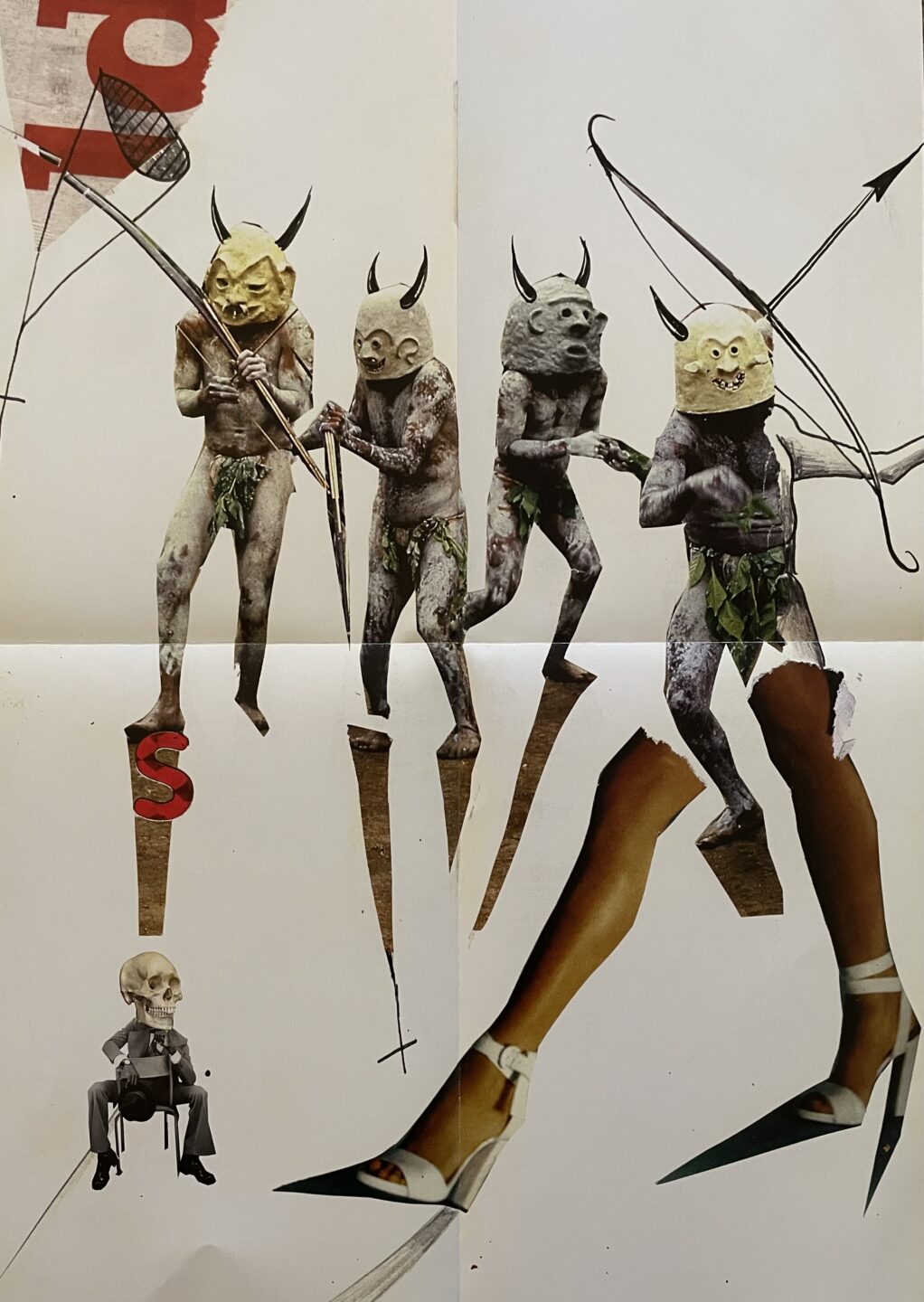 Four in total, for a country that knows a thing or two about carrying history on its shoulders. South African rugby is famous for its physical power, naturally, but reducing it to brute force would be missing half the story. Behind the collisions there's intelligence, timing, an extraordinary understanding of when to accelerate and when to hold back. Laband's music, at least to me (someone so sports-crazy that, on some days, sport probably beats music as my number one obsession), operates on a surprisingly similar principle. It can hit you with a beat that feels like a perfectly executed tackle, then suddenly slip through a gap nobody else seems to notice. The strength is there, but so is the imagination. And, as with the best rugby, some of the most beautiful moments happen when the expected move never arrives. So, our interpretation of Felix’s philosophy is that everything gets a seat at the table. Innocent melodies, twisted electronics, tribal rhythms, broken beats, moments of tenderness and others of darkness. Nothing is excluded simply because it doesn't belong to the same musical family. Quite the opposite: the differences are precisely what make the whole thing special. Of course, an electronic record isn't a national rugby team, and music doesn't magically solve the contradictions of a country still dealing with the consequences of its past. But there's something genuinely beautiful about the idea that harmony doesn't necessarily mean everyone playing the same note. Sometimes it means finding a way for completely different voices to coexist, even when they clash. Especially when they clash. Anyway… the Extended Version gives us sixteen tracks across two records, with four additional compositions: Soft Hands Tremble, Quietly Up The Stairs, The Written Word Remains and Down Beneath The River. Five other pieces: Whistling In Tongues, Falling Off A Horse, Crooked Breath, Red Handed and Black Shoes, also make their way onto vinyl in their full-length versions for the first time. These aren't insignificant details. They give the album more room to move, more corners to investigate, more opportunities to lose yourself in its peculiar logic. And then there's the artwork. The original cover had a skull on a man’s body. Now it’s a collage with a woman’s body, and the skull sits on a chair. Twenty-one years go by and even a skull, already dead to begin with, apparently needs to sit down and take a load off. Time catches up with everyone, including those who technically have none left. Musically, what we have here is a “lethal” mix of children's music and homemade electronic devilry, fused with rhythms that are sometimes spotless, sometimes gloriously distorted. Sonic oxymorons everywhere, constantly contradicting one another, yet making perfect sense. From the opening Whistling In Tongues, the album shows a world in which apparently innocent melodies coexist with sounds that seem to come from somewhere considerably less innocent. There's a playful quality to the arrangements, but nothing is ever quite as simple as it initially appears. Take Miss Teardrop: it could be the perfect soundtrack to a nursery rhyme I'd tell my nine-and-a-half-month-old daughter to help her fall asleep. Although, come to think of it, I'm not entirely sure how reassuring that particular bedtime story would be. Perhaps we'd both end up staring at the ceiling, wondering what on earth is going on. Dirty Nightgown captures a very specific state of mind: that strange passage from the deepest part of the night into the first light of dawn, when you experience something resembling rebirth and internal death at precisely the same time. Your spirit goes into overdrive, just like the track's snares. You're perhaps slightly broken, but somehow more alive than you were a few hours earlier. It's a feeling that's difficult to describe without sounding dramatic, but this track seems to understand it perfectly. Then come the tribal rhythmic quiescences of Soft Hands Tremble, where movement and stillness share the same space, followed by the sonic irony of Falling Off A Horse, forever suspended somewhere between the serious and the ridiculous. There's something almost mischievous about the way Laband constructs these pieces, as if he's perfectly aware of how sophisticated the whole thing is but refuses to take himself too seriously. Underneath The Skin (Vinyl Edit) brings a kind of reflective ruthlessness. It doesn't raise its voice to make a point. It simply gets under your skin, as the title rather conveniently suggests, and stays there. Red Handed follows with its soft, adventurous, almost rocambolesque spirit, before Black Shoes introduces a darker sort of cleanliness, atmospheres so carefully shaped that their precision becomes unsettling. And somewhere along the way, Sleeping Household, Crooked Breath, Quietly Up The Stairs and The Written Word Remains contribute to that extraordinary sense of being inside a place whose architecture keeps changing, and you’re forced to readapt, to think. Rooms appear, passages narrow, familiar objects suddenly seem unfamiliar. There's always another detail waiting for your attention, and Laband never feels the need to point it out. Eventually, we get over the hill and catch a glimpse of light through Radio Right Now. And then there's Minka. Possibly my favourite track on the entire record. A true masterpiece. There's something genuinely poetic about Minka, something that encourages you to look inside yourself, which, let's be fair, isn't always a particularly pleasant sight. Its almost dogmatic commitment to sonic clarity, those carefully placed details and that remarkable sound design take you on a journey without ever holding your hand. You're on your own here. Nobody is coming to explain what you're supposed to feel, where you're supposed to go or what any of it means.
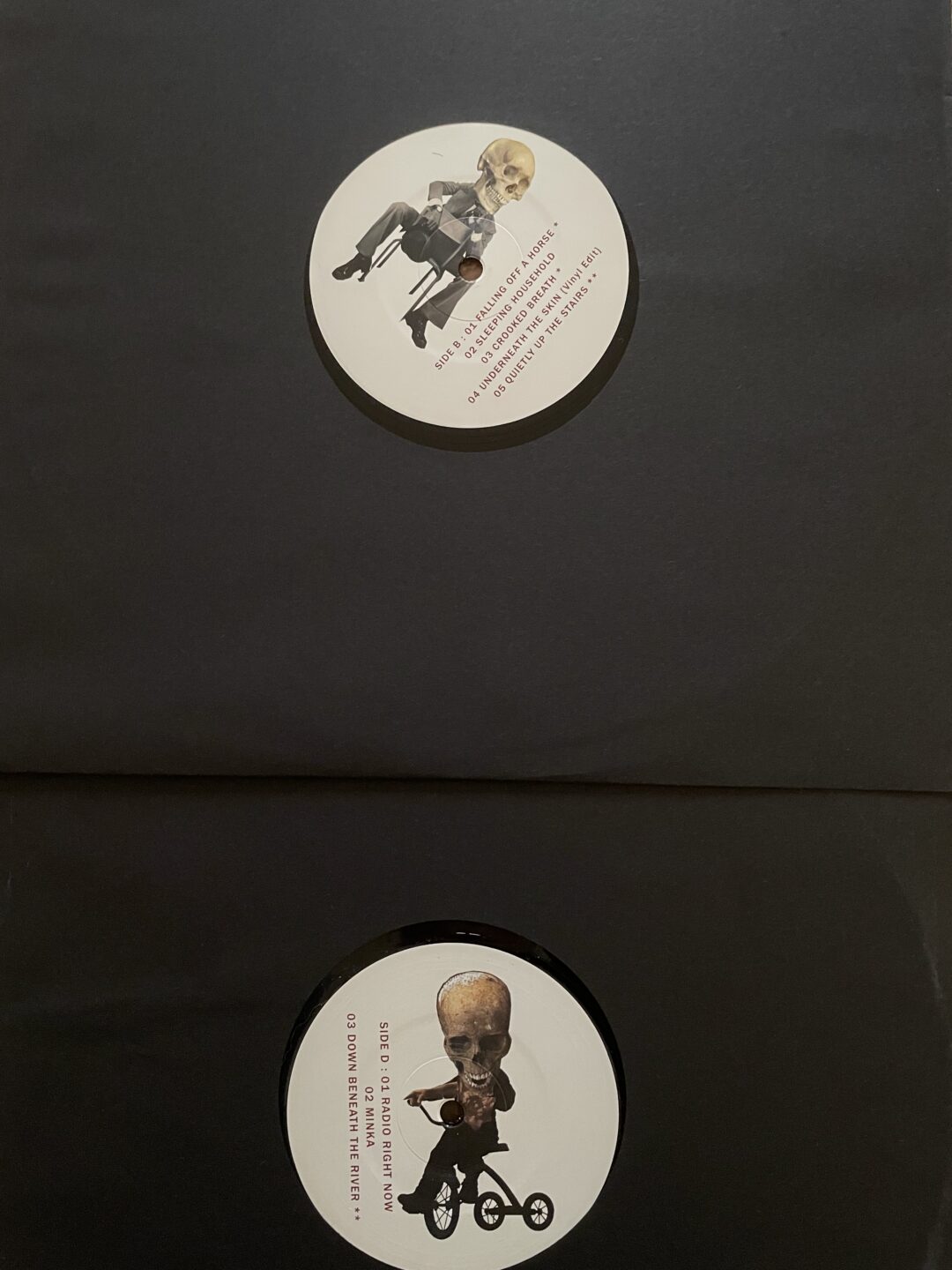 That's exactly why I love it. I love it when a track, a film, any piece of art doesn’t spell everything out and lets you find your own truth in it. But that only works when you’ve built something seriously complex and made it feel like anyone can get in. Suuuper hard to do. Well, the album then closes with Down Beneath The River, one of the four additions to this edition, and its seemingly infinite cosmic arpeggios. After everything that precedes it, there's something deeply reconciling about this ending. Not necessarily a happy ending, mind you, but the feeling of having travelled for so long and finally being able to lift your head again. To borrow from Dante, we emerge once more to see the stars. Here’s what makes Dark Days Exit such an extraordinarily personal record. You can hear the soul of Felix Laband in this music. Not in some vague, romantic sense, but in the very particular way he puts sounds together, allows them to collide, gives them space and occasionally lets them fall apart. He's a complex artist, difficult to pin down, and perhaps not particularly interested in being pinned down in the first place… And there’s something almost disarmingly human about that complexity. The album is full of contradictions, but so are we. It can be tender and cruel, playful and merciless. It doesn't try to resolve these tensions. And at a certain point, words become rather unnecessary. Which is an awkward thing to admit when you've just spent around three hours writing about the record. We believe words matter. They deserve to be chosen carefully, and we do our best to use them properly. But no matter how much language you have at your disposal, no matter how determined you are to explain something, certain kinds of music simply go beyond what can reasonably be said about them. DDE is one of those records. So yes, there's a contradiction in trying to describe something whose greatest quality might be its resistance to description. But this is our small contribution, our attempt to communicate the scale of what Laband achieves here. Because this isn't merely a beautiful album, it's an important record: one that expands your understanding of what electronic music can be, and continues to do so long after its original release. And we should also take a moment to thank Compost Records. There are labels that release music, and then there are labels that seem to be painting on an infinite canvas, one that never reaches its edges and never quite feels finished. Compost belongs to the latter category. Its catalogue resembles one of those enormous works of art in which everyone can find a personal comfort zone, but also something that challenges them, unsettles them or sends them looking for sounds they didn't even know they needed. You can enter from almost anywhere and still discover another passage, another reason to keep listening. For that, thanks guys! And for bringing this LP back into our lives in this expanded form, even more so. A little extra love for the physical edition, which the lovely people at Compost were kind enough to send our way. There's a very nice poster tucked inside, featuring a wonderfully bizarre collage of women's legs, insects, vaguely demonic figures and more funny little skulls doing things. It's that same constant back-and-forth between the sinister and the silly that runs through the music and the cover artwork. Nothing is ever entirely innocent, but nothing takes itself too seriously either. The whole package is beautifully put together, with the kind of care and personality that reminds you why physical records still matter. Some albums deserve a little more than a spot on your hard drive. So yes…the skull may need a chair these days, the music certainly doesn't.
Follow Compost:
instagram
Follow Felix Laband:
soundcloud
Felix Laband 'Dark Days Exit (Extended Version)'
Release: 23th of October, 2026
Buy
Twenty-one years is a long time in electronic music. Long enough for entire genres to be born, become fashionable, get rinsed to death, disappear, and eventually return wearing a more expensive jacket. Long enough for production techniques once considered futuristic to become presets, and surely enough for a record to reveal whether it actually has something to say.
Originally released in 2005, this remarkable album returns, once again through Compost Records, in an Extended Version that feels less like a celebration and more like the continuation of a conversation. That's probably the first thing worth saying about this record: it doesn't sound particularly interested in ageing, and that is because it belongs to a very special category of works: one that’s very hard to categorise… There is a certain irony in revisiting a record called Dark Days Exit more than two decades later. The world doesn't exactly seem to be running out of dark days, does it? Yet the album's relationship with darkness is never straightforward. There's humour in it, tenderness, an almost childish curiosity, and a rather unsettling ability to make beautiful things sound vaguely dangerous. DDE smiles at you while quietly moving the furniture around inside your head! Or at least, that’s the feeling I get listening to it. This album also belongs to a particular South African moment. Created in the decade following apartheid, it carries something of the psychological complexity of a country learning to live with its own history while attempting to go forward. Not that Felix Laband offers political slogans or easy interpretations. And speaking of South Africa, here's a slightly ridiculous comparison that, the more I think about it, isn't that ridiculous… When Dark Days Exit first appears in 2005, the Springboks have one Rugby World Cup to their name. Since then, they add three more, including consecutive victories in 2019 and 2023.
Four in total, for a country that knows a thing or two about carrying history on its shoulders. South African rugby is famous for its physical power, naturally, but reducing it to brute force would be missing half the story. Behind the collisions there's intelligence, timing, an extraordinary understanding of when to accelerate and when to hold back. Laband's music, at least to me (someone so sports-crazy that, on some days, sport probably beats music as my number one obsession), operates on a surprisingly similar principle. It can hit you with a beat that feels like a perfectly executed tackle, then suddenly slip through a gap nobody else seems to notice. The strength is there, but so is the imagination. And, as with the best rugby, some of the most beautiful moments happen when the expected move never arrives. So, our interpretation of Felix’s philosophy is that everything gets a seat at the table. Innocent melodies, twisted electronics, tribal rhythms, broken beats, moments of tenderness and others of darkness. Nothing is excluded simply because it doesn't belong to the same musical family. Quite the opposite: the differences are precisely what make the whole thing special. Of course, an electronic record isn't a national rugby team, and music doesn't magically solve the contradictions of a country still dealing with the consequences of its past. But there's something genuinely beautiful about the idea that harmony doesn't necessarily mean everyone playing the same note. Sometimes it means finding a way for completely different voices to coexist, even when they clash. Especially when they clash. Anyway… the Extended Version gives us sixteen tracks across two records, with four additional compositions: Soft Hands Tremble, Quietly Up The Stairs, The Written Word Remains and Down Beneath The River. Five other pieces: Whistling In Tongues, Falling Off A Horse, Crooked Breath, Red Handed and Black Shoes, also make their way onto vinyl in their full-length versions for the first time. These aren't insignificant details. They give the album more room to move, more corners to investigate, more opportunities to lose yourself in its peculiar logic. And then there's the artwork. The original cover had a skull on a man’s body. Now it’s a collage with a woman’s body, and the skull sits on a chair. Twenty-one years go by and even a skull, already dead to begin with, apparently needs to sit down and take a load off. Time catches up with everyone, including those who technically have none left. Musically, what we have here is a “lethal” mix of children's music and homemade electronic devilry, fused with rhythms that are sometimes spotless, sometimes gloriously distorted. Sonic oxymorons everywhere, constantly contradicting one another, yet making perfect sense. From the opening Whistling In Tongues, the album shows a world in which apparently innocent melodies coexist with sounds that seem to come from somewhere considerably less innocent. There's a playful quality to the arrangements, but nothing is ever quite as simple as it initially appears. Take Miss Teardrop: it could be the perfect soundtrack to a nursery rhyme I'd tell my nine-and-a-half-month-old daughter to help her fall asleep. Although, come to think of it, I'm not entirely sure how reassuring that particular bedtime story would be. Perhaps we'd both end up staring at the ceiling, wondering what on earth is going on. Dirty Nightgown captures a very specific state of mind: that strange passage from the deepest part of the night into the first light of dawn, when you experience something resembling rebirth and internal death at precisely the same time. Your spirit goes into overdrive, just like the track's snares. You're perhaps slightly broken, but somehow more alive than you were a few hours earlier. It's a feeling that's difficult to describe without sounding dramatic, but this track seems to understand it perfectly. Then come the tribal rhythmic quiescences of Soft Hands Tremble, where movement and stillness share the same space, followed by the sonic irony of Falling Off A Horse, forever suspended somewhere between the serious and the ridiculous. There's something almost mischievous about the way Laband constructs these pieces, as if he's perfectly aware of how sophisticated the whole thing is but refuses to take himself too seriously. Underneath The Skin (Vinyl Edit) brings a kind of reflective ruthlessness. It doesn't raise its voice to make a point. It simply gets under your skin, as the title rather conveniently suggests, and stays there. Red Handed follows with its soft, adventurous, almost rocambolesque spirit, before Black Shoes introduces a darker sort of cleanliness, atmospheres so carefully shaped that their precision becomes unsettling. And somewhere along the way, Sleeping Household, Crooked Breath, Quietly Up The Stairs and The Written Word Remains contribute to that extraordinary sense of being inside a place whose architecture keeps changing, and you’re forced to readapt, to think. Rooms appear, passages narrow, familiar objects suddenly seem unfamiliar. There's always another detail waiting for your attention, and Laband never feels the need to point it out. Eventually, we get over the hill and catch a glimpse of light through Radio Right Now. And then there's Minka. Possibly my favourite track on the entire record. A true masterpiece. There's something genuinely poetic about Minka, something that encourages you to look inside yourself, which, let's be fair, isn't always a particularly pleasant sight. Its almost dogmatic commitment to sonic clarity, those carefully placed details and that remarkable sound design take you on a journey without ever holding your hand. You're on your own here. Nobody is coming to explain what you're supposed to feel, where you're supposed to go or what any of it means.
That's exactly why I love it. I love it when a track, a film, any piece of art doesn’t spell everything out and lets you find your own truth in it. But that only works when you’ve built something seriously complex and made it feel like anyone can get in. Suuuper hard to do. Well, the album then closes with Down Beneath The River, one of the four additions to this edition, and its seemingly infinite cosmic arpeggios. After everything that precedes it, there's something deeply reconciling about this ending. Not necessarily a happy ending, mind you, but the feeling of having travelled for so long and finally being able to lift your head again. To borrow from Dante, we emerge once more to see the stars. Here’s what makes Dark Days Exit such an extraordinarily personal record. You can hear the soul of Felix Laband in this music. Not in some vague, romantic sense, but in the very particular way he puts sounds together, allows them to collide, gives them space and occasionally lets them fall apart. He's a complex artist, difficult to pin down, and perhaps not particularly interested in being pinned down in the first place… And there’s something almost disarmingly human about that complexity. The album is full of contradictions, but so are we. It can be tender and cruel, playful and merciless. It doesn't try to resolve these tensions. And at a certain point, words become rather unnecessary. Which is an awkward thing to admit when you've just spent around three hours writing about the record. We believe words matter. They deserve to be chosen carefully, and we do our best to use them properly. But no matter how much language you have at your disposal, no matter how determined you are to explain something, certain kinds of music simply go beyond what can reasonably be said about them. DDE is one of those records. So yes, there's a contradiction in trying to describe something whose greatest quality might be its resistance to description. But this is our small contribution, our attempt to communicate the scale of what Laband achieves here. Because this isn't merely a beautiful album, it's an important record: one that expands your understanding of what electronic music can be, and continues to do so long after its original release. And we should also take a moment to thank Compost Records. There are labels that release music, and then there are labels that seem to be painting on an infinite canvas, one that never reaches its edges and never quite feels finished. Compost belongs to the latter category. Its catalogue resembles one of those enormous works of art in which everyone can find a personal comfort zone, but also something that challenges them, unsettles them or sends them looking for sounds they didn't even know they needed. You can enter from almost anywhere and still discover another passage, another reason to keep listening. For that, thanks guys! And for bringing this LP back into our lives in this expanded form, even more so. A little extra love for the physical edition, which the lovely people at Compost were kind enough to send our way. There's a very nice poster tucked inside, featuring a wonderfully bizarre collage of women's legs, insects, vaguely demonic figures and more funny little skulls doing things. It's that same constant back-and-forth between the sinister and the silly that runs through the music and the cover artwork. Nothing is ever entirely innocent, but nothing takes itself too seriously either. The whole package is beautifully put together, with the kind of care and personality that reminds you why physical records still matter. Some albums deserve a little more than a spot on your hard drive. So yes…the skull may need a chair these days, the music certainly doesn't.
Follow Compost:
instagram
Follow Felix Laband:
soundcloud
Felix Laband 'Dark Days Exit (Extended Version)'
Release: 23th of October, 2026
Buy