
APPAREL REVIEW:
The Morganites – EP
[Lovemonk]
I've been fascinated by jukeboxes ever since I was a little boy. I remember standing in front of those wonderful machines, staring through the glass at a mechanism I could never quite understand. There were records moving around inside, almost flying, before one of them would eventually land on what looked to me like a little runway, ready to be played. It was a kind of magic, especially at that age, and I could spend an incredible amount of time simply watching it happen.
But the most exciting part was having two or three coins in my hand and knowing that I could decide what everybody around me was going to listen to for the next few minutes. I would stand there studying the titles, changing my mind several times, trying to make the right choice as if something terribly important depended on it. And perhaps, in my little world, it really did. Once the record started playing, those few minutes somehow became much longer, almost infinite. I had chosen the music, and whether the people sitting nearby appreciated my taste or not, they were going to share that little experience with me. For many years, jukeboxes accompanied people's lives in bars, small squares, seaside establishments and all those places where music wasn't necessarily the reason for being there, but could suddenly become the most important thing happening. I loved how a song could change the atmosphere of a room, interrupt a conversation or make somebody start moving without even realising it. And I especially loved the possibility of discovering music from different parts of the world through those small records, some of which I would probably never have encountered otherwise. Looking back, I sometimes think those afternoons may have had a greater influence on my life than I realised. Perhaps that was where my curiosity as a music lover began to develop into something else, and where, without knowing it, I was already learning to think like a record label owner. Choosing music, imagining how other people might react to it, finding pleasure in sharing a discovery. It all sounds very familiar to me today. Of course, the jukebox eventually became another victim of technological progress. The original machines slowly disappeared, replaced first by those rather strange CD jukeboxes that often tried to imitate the appearance of the real thing, before ending up in the hands of collectors and nostalgic enthusiasts. I have nothing against CDs, quite the opposite, but I always found those imitations a little disappointing. The magic wasn't simply in pressing a button and hearing a song. It was in watching that complicated mechanical ritual unfold in front of you. I was lucky enough to own a real jukebox for many years at my parents' country house. Having one at home was a wonderful privilege, and I could finally enjoy that little performance as often as I wanted, without having to search my pockets for coins. What I also had, of course, was a considerable number of seven-inch records that had spent part of their lives inside that machine. Those records would eventually become a collection of their own, but I'll come back to that later. I suppose my fascination with physical music formats comes from those experiences, and it has remained part of the way I listen to music, even after so many years working in the record industry. Whenever I receive a demo for Apparel Music, something curious happens almost immediately. While listening, I instinctively begin imagining the format in which that particular track should exist. Sometimes I see a twelve-inch record, sometimes a CD or a cassette, and sometimes I feel that the music belongs entirely to the digital world. It's a kind of mental simulation that starts before I've even finished the first listen, and it has very little to do with commercial calculations, at least initially. To me, every format has its own personality, its own audience and, more importantly, its own imaginary world. A twelve-inch record often makes me think of DJs, clubs, long musical journeys or albums to be enjoyed from beginning to end, while a cassette evokes a completely different relationship with music. Even streaming, with all its advantages and contradictions, has developed its own way of presenting music to listeners.
And then there's the seven-inch, a format for which I've always had a particular weakness.
The little 45 rpm single belongs to a world of its own. Unlike the twelve-inch, historically associated with LPs, extended mixes and DJ culture, the seven-inch was made for songs that could tell their story in just a few minutes. It was the perfect companion for jukeboxes and domestic turntables, and it has played an enormous role in the history of popular music, from soul and funk to reggae, where it continues to occupy a very special place. Its physical limitations have always been part of its charm. There isn't much space for unnecessary things, and perhaps that's why some of the most extraordinary songs ever recorded seem perfectly at home on such a small record. But beyond all these considerations, for me the seven-inch has always had a very particular flavour. I would almost say a smell, although I can't really explain what that smell is. It's something connected with childhood, discovery, summer afternoons and those wonderful little records that could make you travel without going anywhere. A few days ago, a promotional copy of The Morganites' EP, released by Lovemonk on October 30th, arrived at my home. I immediately liked the object itself, with its bright orange label and those thin red geometric lines creating a beautiful contrast with the black vinyl. 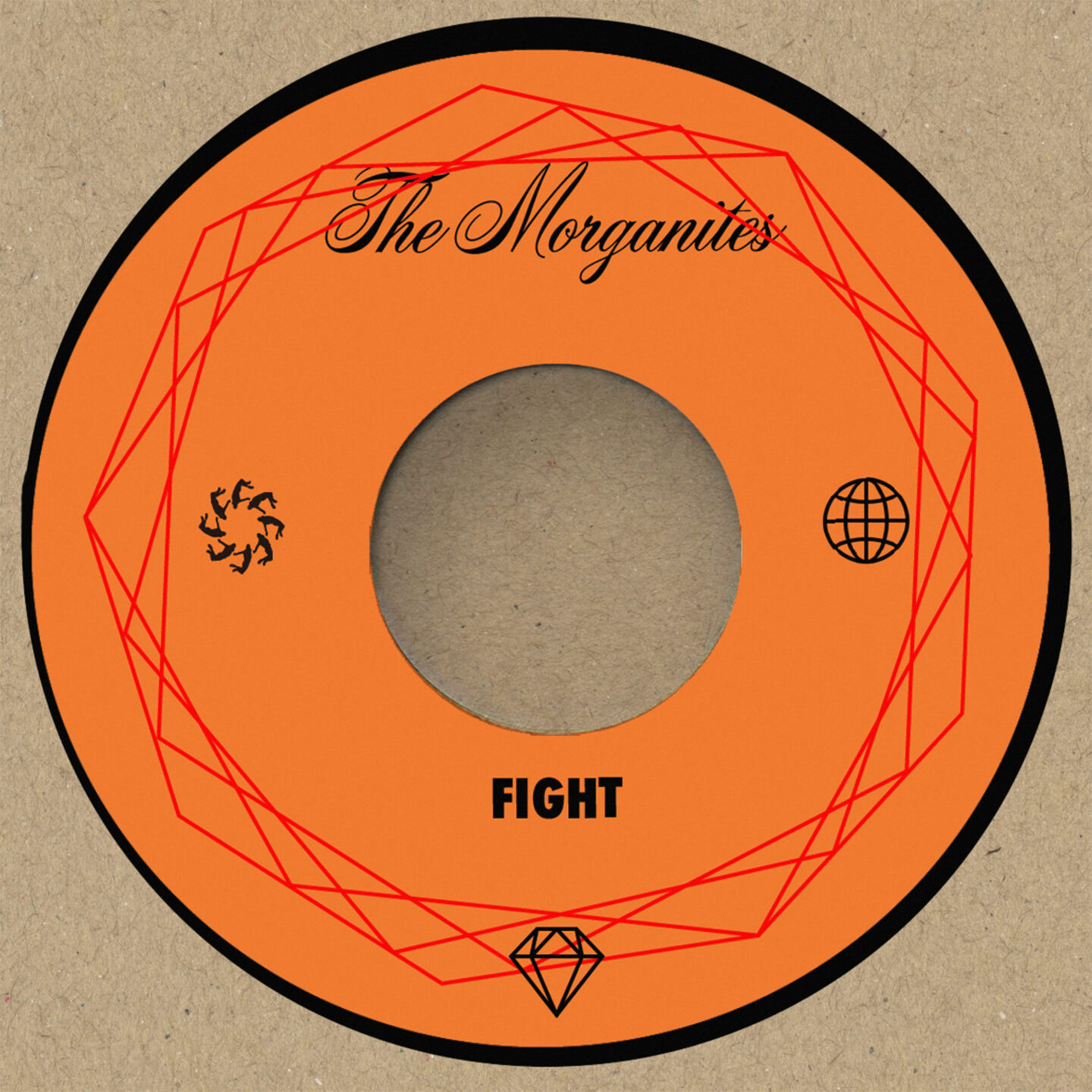 There's something about a record like this that makes me want to play it before I've even thought about what it might sound like. I put it on the turntable, lowered the needle and, within a few seconds, found myself standing in front of a jukebox again. It was one of those strange moments when a sound brings back a memory with such precision that you almost feel you're physically there. I could see myself holding those coins, looking at the song titles and preparing to make my choice, completely unaware that several decades later I would still be doing essentially the same thing, although with rather different responsibilities. And the funny thing is that the music itself seemed to come from exactly that world. The Morganites are a project born in Madrid from a rather amusing conversation between Javier Adán and Santi Rapallo, two musicians from the city's adventurous jazz scene. During the recording of El sonido bastardo, the debut album by Danzón el Gato, the two were apparently joking about their inability to dance and eventually came up with the idea of writing something they could actually move to onstage. I like the simplicity of that beginning. No complicated concept or elaborate strategy, just two musicians having fun with an idea that gradually became something more interesting. Soul music was the natural direction, and with the García Brothers taking care of the horns and Rolita bringing her wonderful voice into the picture, the project began to take shape. Their intention was to create a band capable of playing soul music for people who wanted to dance, without necessarily trying to recreate the past or become another revival act. I think that's an important distinction, because there's plenty of music around that tries very hard to sound as though it belongs to another decade, sometimes forgetting that the most interesting thing about those old records wasn't their age, but the freedom and spontaneity with which they were created.
The three tracks on this EP have something of that spirit.
Something Special opens with a wonderfully tight rhythm section, a slightly dirty guitar sound and Rolita's voice immediately giving the song its character. I particularly enjoy the natural way everything fits together, without the feeling that the musicians are trying too hard to impress anyone. There's a lovely contrast between the warmth of the groove and the slightly complicated love story behind the lyrics, which makes the song even more enjoyable. Fight, the track featured on that beautiful orange label, brings a different kind of energy. Rolita sounds almost angry at times, and the lyrics deal with violence, injustice and the need to resist rather than surrender. It's a powerful message, but what interests me most is how naturally it sits inside music that makes you want to move. I have always loved that aspect of soul music, its ability to address serious subjects without necessarily losing the physical pleasure of listening. Then there's Soula Queen, with its irresistible swing, lively horns and that wonderfully carefree feeling that immediately puts a smile on my face. It's probably the track that most directly brings me back to my jukebox memories, although I suspect that has more to do with my personal associations than with anything the musicians originally intended. The story of The Morganites also has an unexpected ending, or at least an interruption. The studio where Javier Adán and Santi Rapallo had been working was sold, forcing them to leave and bringing their plans for a live band to a halt. So what remains, for the moment, are these three songs, the result of an idea that might have developed into something much bigger. 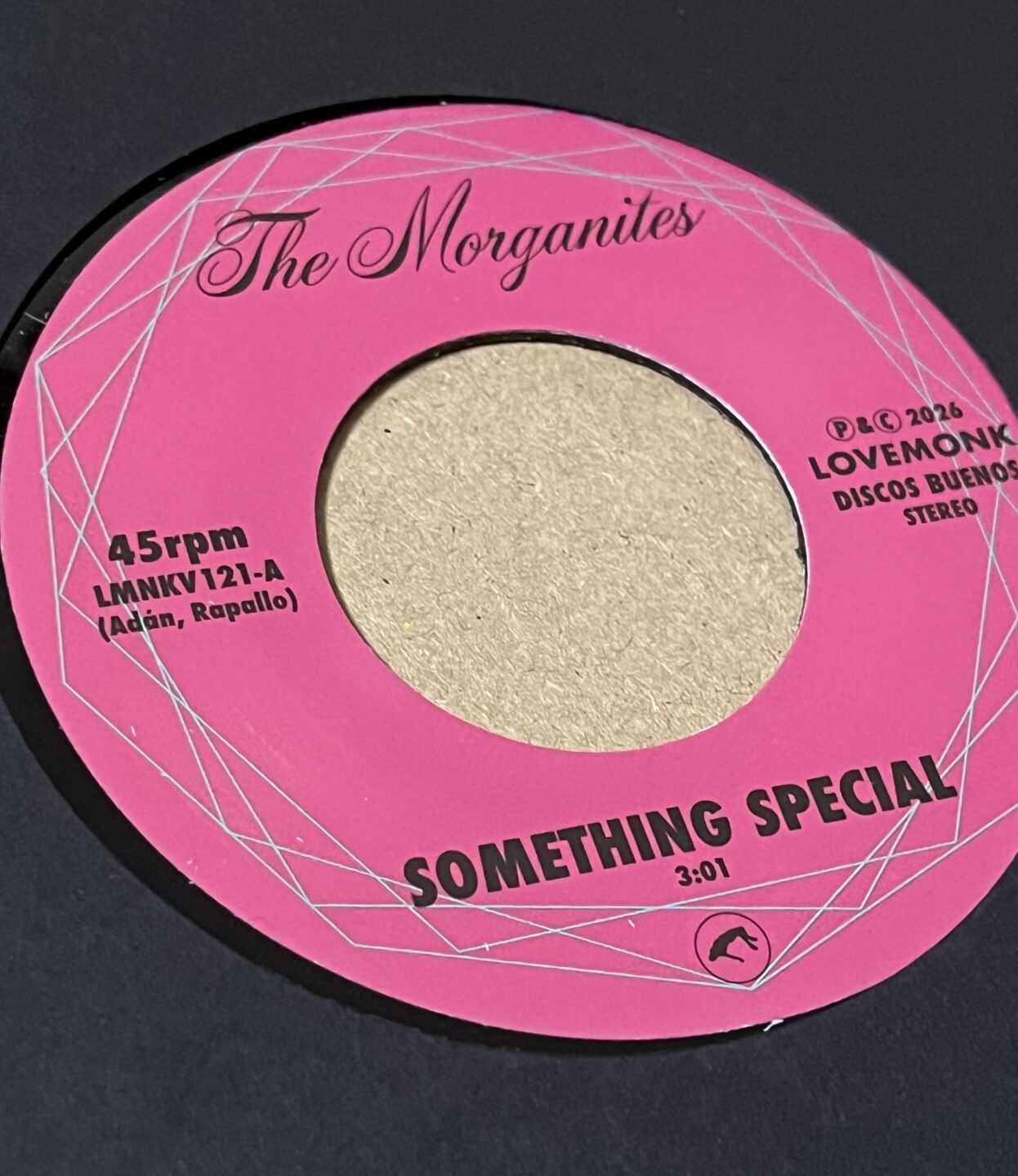 I find that rather charming in its own way. Not every musical project needs an elaborate career, several albums or a carefully planned future to leave something worthwhile behind. Sometimes a few songs recorded with the right people, in the right spirit, can be enough. While listening to this record, another memory came back to me, one that takes me straight back to the jukebox I used to have at my parents' country house. I still own hundreds of those old seven-inch records that once belonged to that very machine, and I keep them inside a red refrigerator. Yes, an actual red refrigerator, which over the years has become a rather unusual record cabinet. Many of those records still carry the familiar promotional markings, including the words "Edizione Promozionale *Campione non Commerciabile", something that I remember seeing so often without giving it much thought at the time. What's interesting is that those records weren't necessarily the same singles people could buy in record shops. In Italy, many jukebox records belonged to a separate promotional circuit, with special editions intended to introduce new songs to the public through the machines installed in bars and other venues. They often carried labels identifying them as promotional releases, not intended for ordinary retail sale, and in some cases even featured different artists on the two sides. Thinking about it now, I find that particularly fascinating. Those jukeboxes weren't simply machines that played music in exchange for a coin. They were also a way for record labels to get their songs heard, long before the promotional possibilities we have today. A new record would find its way into a bar or a seaside establishment, somebody would choose it almost by chance and, with a little luck, discover a song they might eventually want to own. Perhaps the connection between my childhood obsession with jukeboxes and my decision to work in the record industry wasn't such a coincidence after all. What makes me smile is that so many of those promotional records, originally intended to have a relatively short life inside a machine, are still with me decades later, carefully stored in that red refrigerator. Their original purpose has long since disappeared, but they've become something much more personal, and every now and then I still find myself going through them, rediscovering forgotten titles and remembering where and when I first heard a particular song. There is something rather wonderful about the fact that a record designed to promote music for a limited period can end up becoming a lifelong companion. And that's probably why receiving The Morganites' EP brought back so many memories. It reminded me of those promotional records that seemed to exist outside time, containing music that could have been recorded yesterday or several decades ago without making much difference to the pleasure of listening. Not because the songs are old-fashioned, but because certain musical ideas don't really age when they're played with conviction and personality. I don't particularly enjoy describing records as timeless, because it's one of those expressions we tend to use far too often in music journalism. But every now and then a record arrives that makes me understand why we keep returning to that word. The Morganites have managed to give me that sensation with just three songs, and I suspect that, had I discovered this EP many years ago, I would probably have chosen one of its tracks while standing in front of a jukebox, with a few coins in my pocket, completely unaware of the musical journey that was waiting for me. So thanks to Lovemonk and everyone involved in The Morganites for creating this lovely little record, and, as always, a special thank you to Will at Only Good Staff for bringing it to my attention. I hope Javier Adán, Santi Rapallo and the rest of the musicians eventually find an opportunity to continue what they started, because I'd be curious to hear where this music could take them. In the meantime, I think I'll give the record another spin before putting it away.
And I already know where it's going to end up, inside that red refrigerator, among the records that once flew through the mechanical arms of my old jukebox and that, after all these years, are still capable of taking me somewhere else.
Release date 30th of October 2026


APPAREL REVIEW:
The Morganites – EP
[Lovemonk]
I've been fascinated by jukeboxes ever since I was a little boy. I remember standing in front of those wonderful machines, staring through the glass at a mechanism I could never quite understand. There were records moving around inside, almost flying, before one of them would eventually land on what looked to me like a little runway, ready to be played. It was a kind of magic, especially at that age, and I could spend an incredible amount of time simply watching it happen.
But the most exciting part was having two or three coins in my hand and knowing that I could decide what everybody around me was going to listen to for the next few minutes. I would stand there studying the titles, changing my mind several times, trying to make the right choice as if something terribly important depended on it. And perhaps, in my little world, it really did. Once the record started playing, those few minutes somehow became much longer, almost infinite. I had chosen the music, and whether the people sitting nearby appreciated my taste or not, they were going to share that little experience with me. For many years, jukeboxes accompanied people's lives in bars, small squares, seaside establishments and all those places where music wasn't necessarily the reason for being there, but could suddenly become the most important thing happening. I loved how a song could change the atmosphere of a room, interrupt a conversation or make somebody start moving without even realising it. And I especially loved the possibility of discovering music from different parts of the world through those small records, some of which I would probably never have encountered otherwise. Looking back, I sometimes think those afternoons may have had a greater influence on my life than I realised. Perhaps that was where my curiosity as a music lover began to develop into something else, and where, without knowing it, I was already learning to think like a record label owner. Choosing music, imagining how other people might react to it, finding pleasure in sharing a discovery. It all sounds very familiar to me today. Of course, the jukebox eventually became another victim of technological progress. The original machines slowly disappeared, replaced first by those rather strange CD jukeboxes that often tried to imitate the appearance of the real thing, before ending up in the hands of collectors and nostalgic enthusiasts. I have nothing against CDs, quite the opposite, but I always found those imitations a little disappointing. The magic wasn't simply in pressing a button and hearing a song. It was in watching that complicated mechanical ritual unfold in front of you. I was lucky enough to own a real jukebox for many years at my parents' country house. Having one at home was a wonderful privilege, and I could finally enjoy that little performance as often as I wanted, without having to search my pockets for coins. What I also had, of course, was a considerable number of seven-inch records that had spent part of their lives inside that machine. Those records would eventually become a collection of their own, but I'll come back to that later. I suppose my fascination with physical music formats comes from those experiences, and it has remained part of the way I listen to music, even after so many years working in the record industry. Whenever I receive a demo for Apparel Music, something curious happens almost immediately. While listening, I instinctively begin imagining the format in which that particular track should exist. Sometimes I see a twelve-inch record, sometimes a CD or a cassette, and sometimes I feel that the music belongs entirely to the digital world. It's a kind of mental simulation that starts before I've even finished the first listen, and it has very little to do with commercial calculations, at least initially. To me, every format has its own personality, its own audience and, more importantly, its own imaginary world. A twelve-inch record often makes me think of DJs, clubs, long musical journeys or albums to be enjoyed from beginning to end, while a cassette evokes a completely different relationship with music. Even streaming, with all its advantages and contradictions, has developed its own way of presenting music to listeners.
And then there's the seven-inch, a format for which I've always had a particular weakness.
The little 45 rpm single belongs to a world of its own. Unlike the twelve-inch, historically associated with LPs, extended mixes and DJ culture, the seven-inch was made for songs that could tell their story in just a few minutes. It was the perfect companion for jukeboxes and domestic turntables, and it has played an enormous role in the history of popular music, from soul and funk to reggae, where it continues to occupy a very special place. Its physical limitations have always been part of its charm. There isn't much space for unnecessary things, and perhaps that's why some of the most extraordinary songs ever recorded seem perfectly at home on such a small record. But beyond all these considerations, for me the seven-inch has always had a very particular flavour. I would almost say a smell, although I can't really explain what that smell is. It's something connected with childhood, discovery, summer afternoons and those wonderful little records that could make you travel without going anywhere. A few days ago, a promotional copy of The Morganites' EP, released by Lovemonk on October 30th, arrived at my home. I immediately liked the object itself, with its bright orange label and those thin red geometric lines creating a beautiful contrast with the black vinyl.
There's something about a record like this that makes me want to play it before I've even thought about what it might sound like. I put it on the turntable, lowered the needle and, within a few seconds, found myself standing in front of a jukebox again. It was one of those strange moments when a sound brings back a memory with such precision that you almost feel you're physically there. I could see myself holding those coins, looking at the song titles and preparing to make my choice, completely unaware that several decades later I would still be doing essentially the same thing, although with rather different responsibilities. And the funny thing is that the music itself seemed to come from exactly that world. The Morganites are a project born in Madrid from a rather amusing conversation between Javier Adán and Santi Rapallo, two musicians from the city's adventurous jazz scene. During the recording of El sonido bastardo, the debut album by Danzón el Gato, the two were apparently joking about their inability to dance and eventually came up with the idea of writing something they could actually move to onstage. I like the simplicity of that beginning. No complicated concept or elaborate strategy, just two musicians having fun with an idea that gradually became something more interesting. Soul music was the natural direction, and with the García Brothers taking care of the horns and Rolita bringing her wonderful voice into the picture, the project began to take shape. Their intention was to create a band capable of playing soul music for people who wanted to dance, without necessarily trying to recreate the past or become another revival act. I think that's an important distinction, because there's plenty of music around that tries very hard to sound as though it belongs to another decade, sometimes forgetting that the most interesting thing about those old records wasn't their age, but the freedom and spontaneity with which they were created.
The three tracks on this EP have something of that spirit.
Something Special opens with a wonderfully tight rhythm section, a slightly dirty guitar sound and Rolita's voice immediately giving the song its character. I particularly enjoy the natural way everything fits together, without the feeling that the musicians are trying too hard to impress anyone. There's a lovely contrast between the warmth of the groove and the slightly complicated love story behind the lyrics, which makes the song even more enjoyable. Fight, the track featured on that beautiful orange label, brings a different kind of energy. Rolita sounds almost angry at times, and the lyrics deal with violence, injustice and the need to resist rather than surrender. It's a powerful message, but what interests me most is how naturally it sits inside music that makes you want to move. I have always loved that aspect of soul music, its ability to address serious subjects without necessarily losing the physical pleasure of listening. Then there's Soula Queen, with its irresistible swing, lively horns and that wonderfully carefree feeling that immediately puts a smile on my face. It's probably the track that most directly brings me back to my jukebox memories, although I suspect that has more to do with my personal associations than with anything the musicians originally intended. The story of The Morganites also has an unexpected ending, or at least an interruption. The studio where Javier Adán and Santi Rapallo had been working was sold, forcing them to leave and bringing their plans for a live band to a halt. So what remains, for the moment, are these three songs, the result of an idea that might have developed into something much bigger.
I find that rather charming in its own way. Not every musical project needs an elaborate career, several albums or a carefully planned future to leave something worthwhile behind. Sometimes a few songs recorded with the right people, in the right spirit, can be enough. While listening to this record, another memory came back to me, one that takes me straight back to the jukebox I used to have at my parents' country house. I still own hundreds of those old seven-inch records that once belonged to that very machine, and I keep them inside a red refrigerator. Yes, an actual red refrigerator, which over the years has become a rather unusual record cabinet. Many of those records still carry the familiar promotional markings, including the words "Edizione Promozionale *Campione non Commerciabile", something that I remember seeing so often without giving it much thought at the time. What's interesting is that those records weren't necessarily the same singles people could buy in record shops. In Italy, many jukebox records belonged to a separate promotional circuit, with special editions intended to introduce new songs to the public through the machines installed in bars and other venues. They often carried labels identifying them as promotional releases, not intended for ordinary retail sale, and in some cases even featured different artists on the two sides. Thinking about it now, I find that particularly fascinating. Those jukeboxes weren't simply machines that played music in exchange for a coin. They were also a way for record labels to get their songs heard, long before the promotional possibilities we have today. A new record would find its way into a bar or a seaside establishment, somebody would choose it almost by chance and, with a little luck, discover a song they might eventually want to own. Perhaps the connection between my childhood obsession with jukeboxes and my decision to work in the record industry wasn't such a coincidence after all. What makes me smile is that so many of those promotional records, originally intended to have a relatively short life inside a machine, are still with me decades later, carefully stored in that red refrigerator. Their original purpose has long since disappeared, but they've become something much more personal, and every now and then I still find myself going through them, rediscovering forgotten titles and remembering where and when I first heard a particular song. There is something rather wonderful about the fact that a record designed to promote music for a limited period can end up becoming a lifelong companion. And that's probably why receiving The Morganites' EP brought back so many memories. It reminded me of those promotional records that seemed to exist outside time, containing music that could have been recorded yesterday or several decades ago without making much difference to the pleasure of listening. Not because the songs are old-fashioned, but because certain musical ideas don't really age when they're played with conviction and personality. I don't particularly enjoy describing records as timeless, because it's one of those expressions we tend to use far too often in music journalism. But every now and then a record arrives that makes me understand why we keep returning to that word. The Morganites have managed to give me that sensation with just three songs, and I suspect that, had I discovered this EP many years ago, I would probably have chosen one of its tracks while standing in front of a jukebox, with a few coins in my pocket, completely unaware of the musical journey that was waiting for me. So thanks to Lovemonk and everyone involved in The Morganites for creating this lovely little record, and, as always, a special thank you to Will at Only Good Staff for bringing it to my attention. I hope Javier Adán, Santi Rapallo and the rest of the musicians eventually find an opportunity to continue what they started, because I'd be curious to hear where this music could take them. In the meantime, I think I'll give the record another spin before putting it away.
And I already know where it's going to end up, inside that red refrigerator, among the records that once flew through the mechanical arms of my old jukebox and that, after all these years, are still capable of taking me somewhere else.
Release date 30th of October 2026


