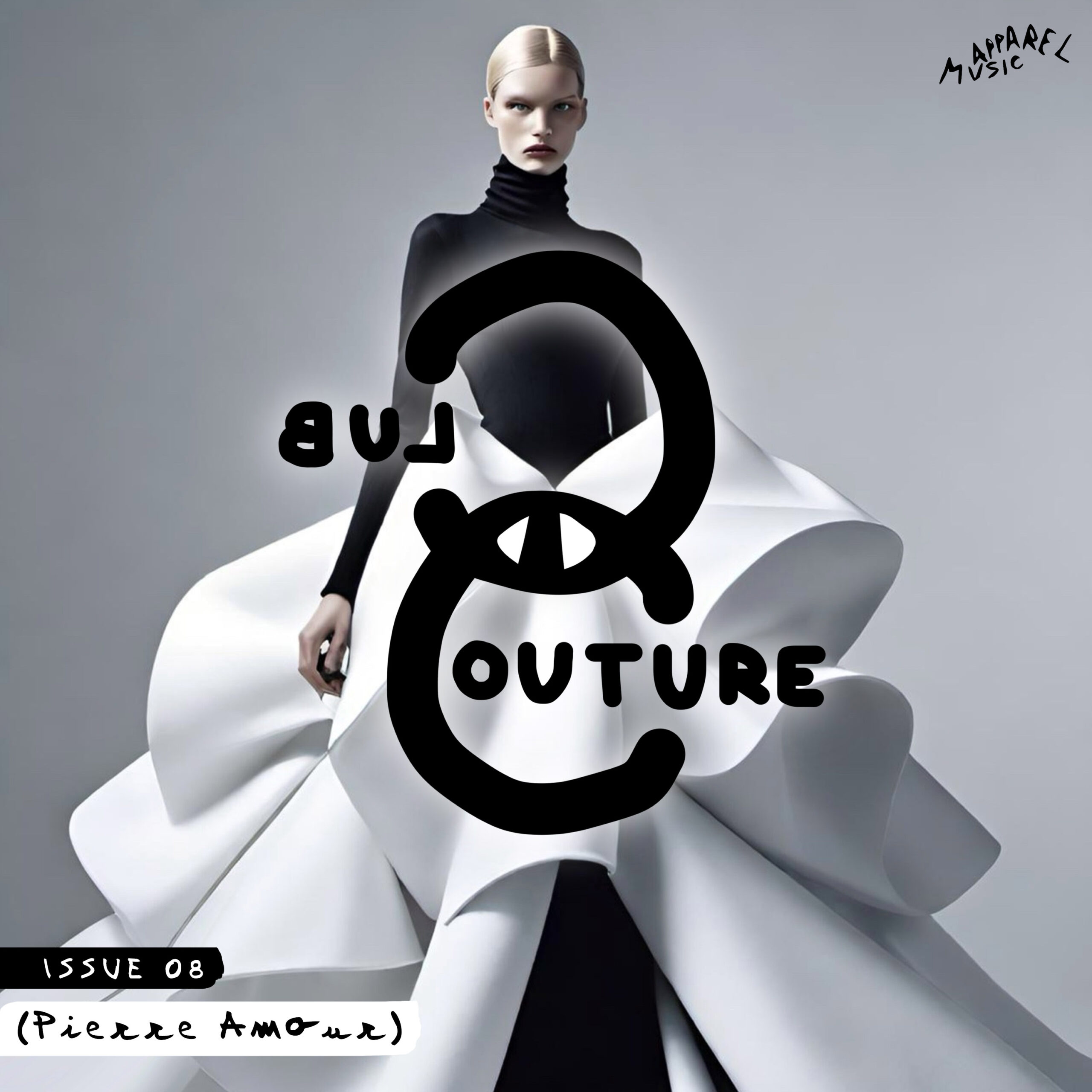
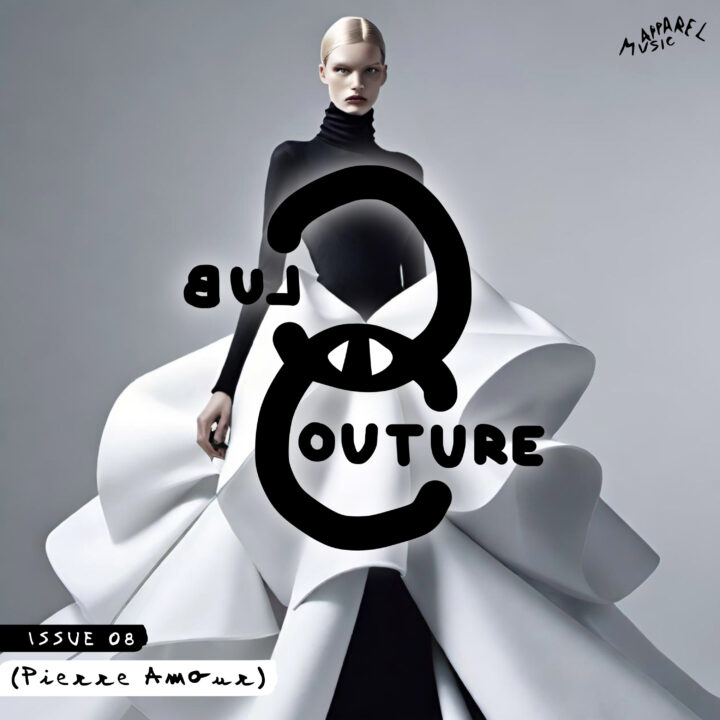
CLUB COUTURE — ISSUE 08:
(Pierre Amour)
[France]
CLUB COUTURE is a new Apparel Music feature dedicated to emerging talents working across fashion, art, beauty, image making. Designers, Fashion Designer, artists and creatives whose practice sits somewhere between craft, culture and personal expression. The project starts from Milan, telling the stories of our local community and the people shaping it, but always with an open gaze outward. Each issue introduces new artists through short portraits. No hype, just process, taste and perspective.
CLUB COUTURE — ISSUE 08:
(Pierre Amour)
[France]
CLUB COUTURE is a new Apparel Music feature dedicated to emerging talents working across fashion, art, beauty, image making. Designers, Fashion Designer, artists and creatives whose practice sits somewhere between craft, culture and personal expression. The project starts from Milan, telling the stories of our local community and the people shaping it, but always with an open gaze outward. Each issue introduces new artists through short portraits. No hype, just process, taste and perspective.
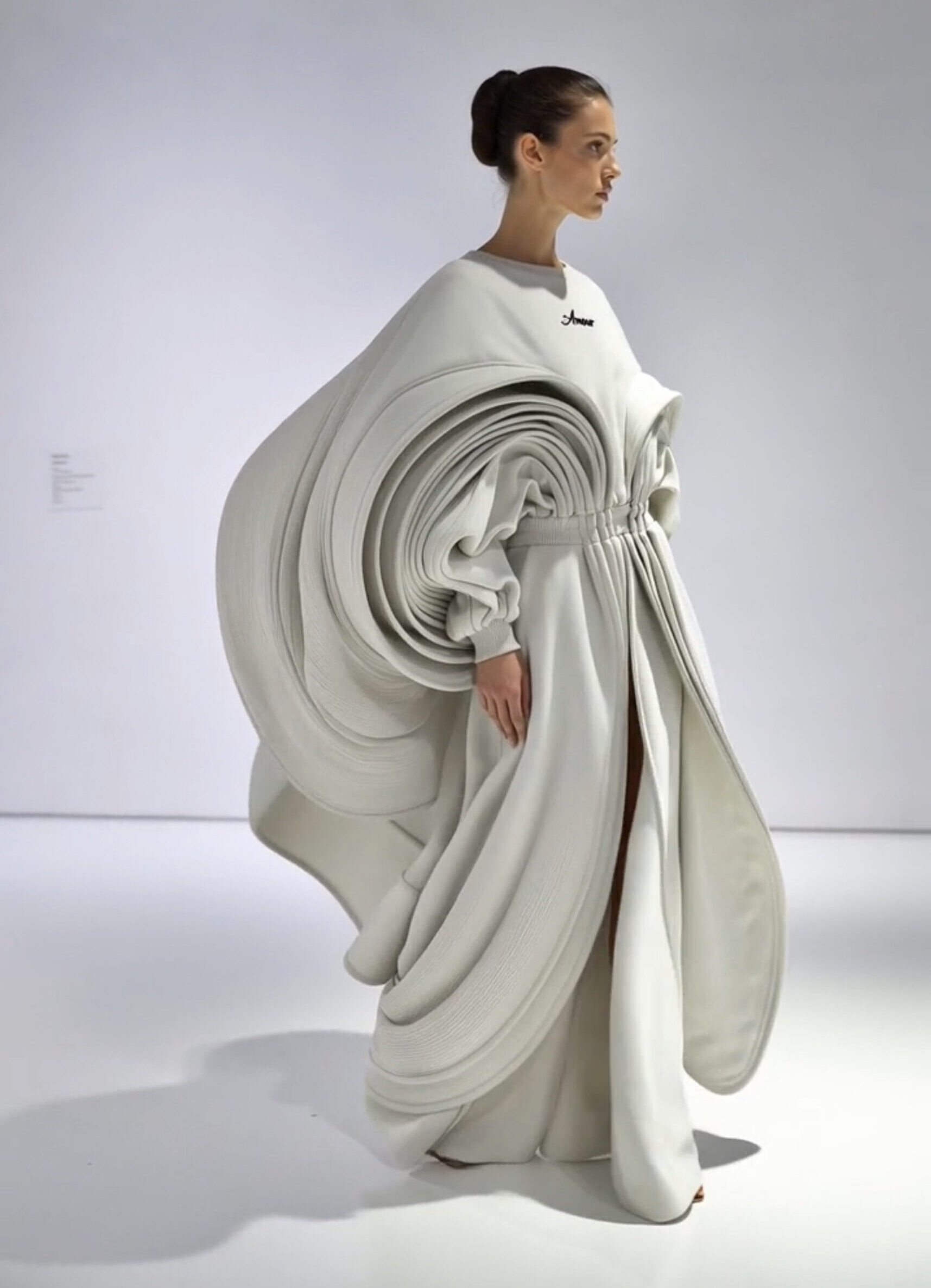
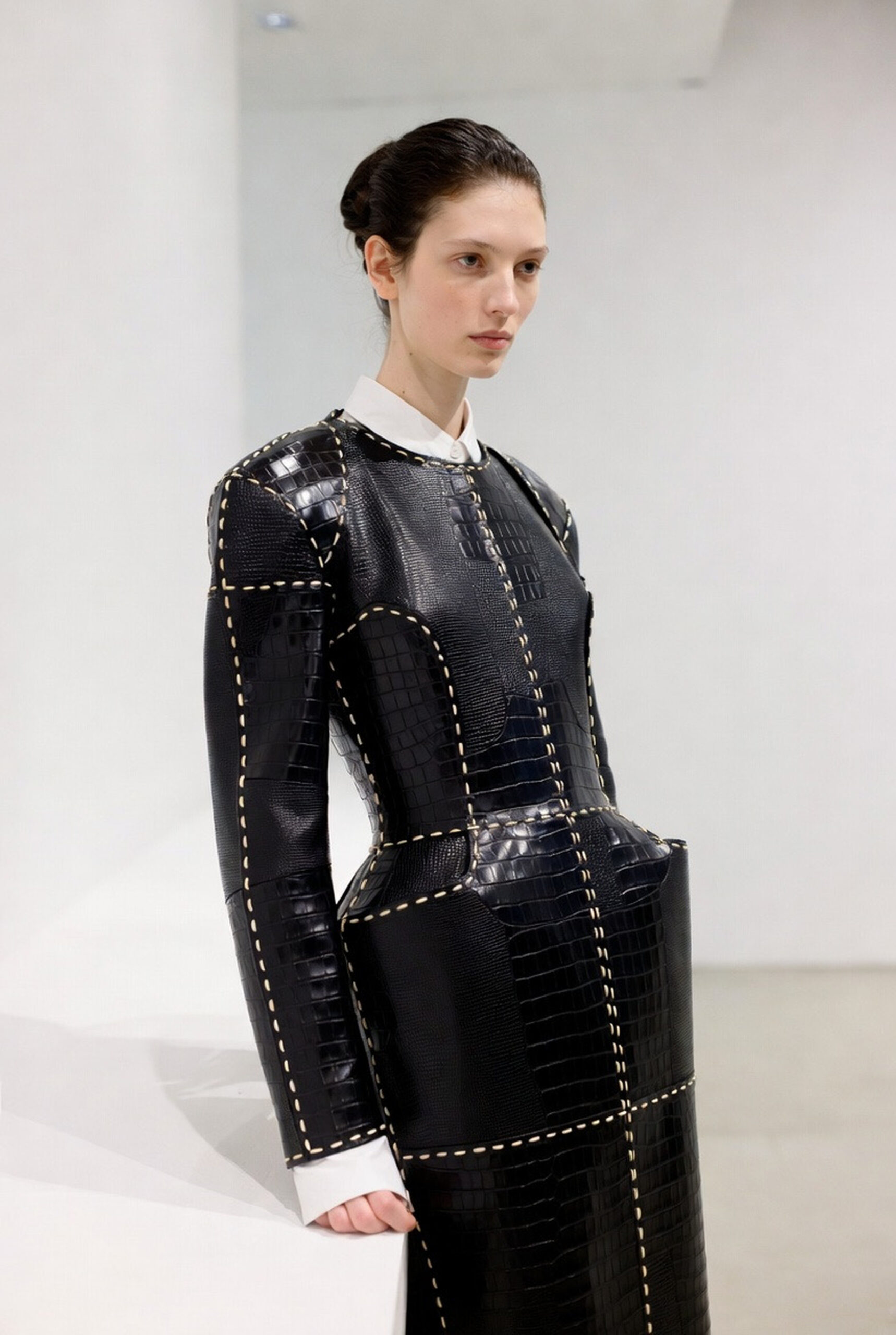
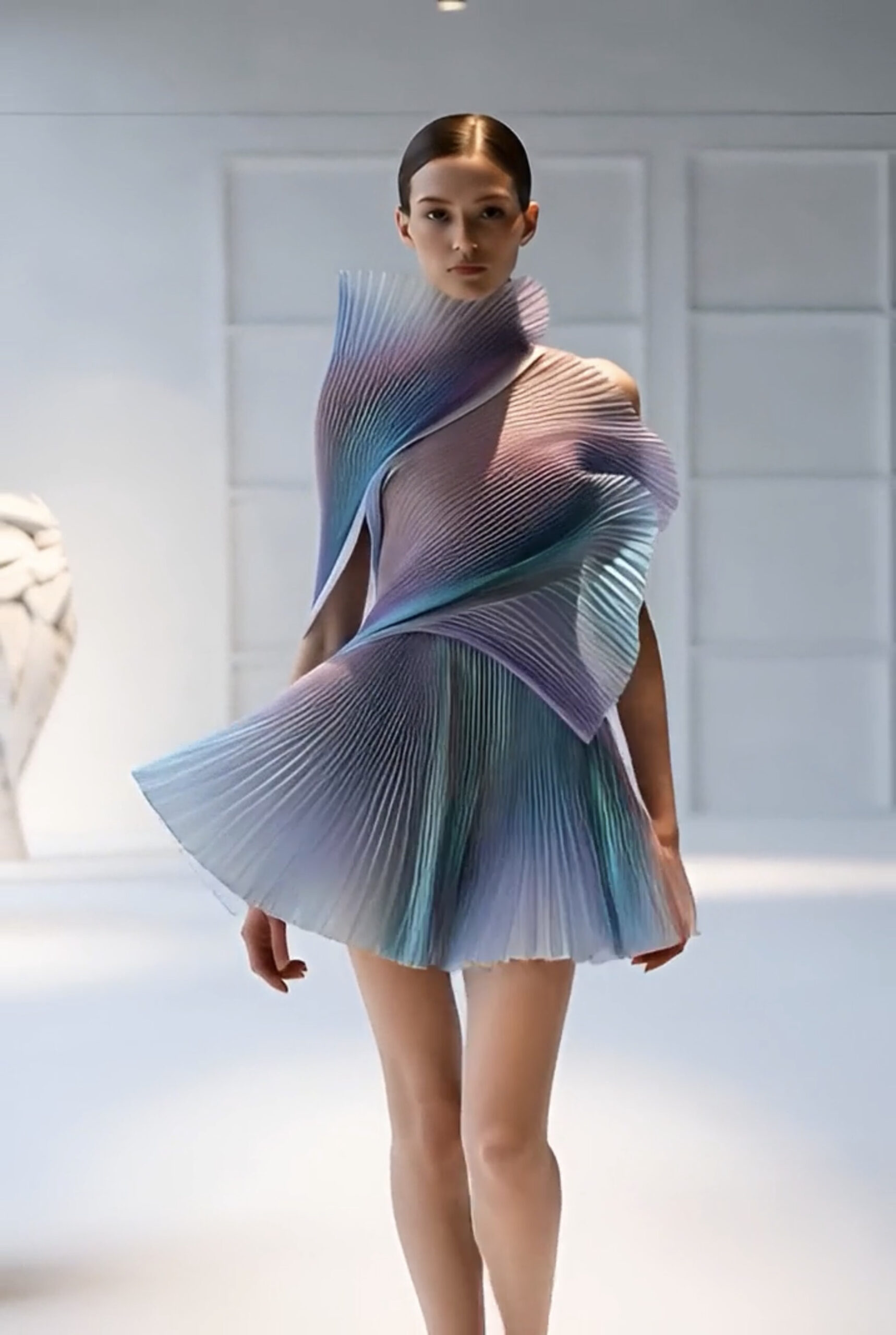
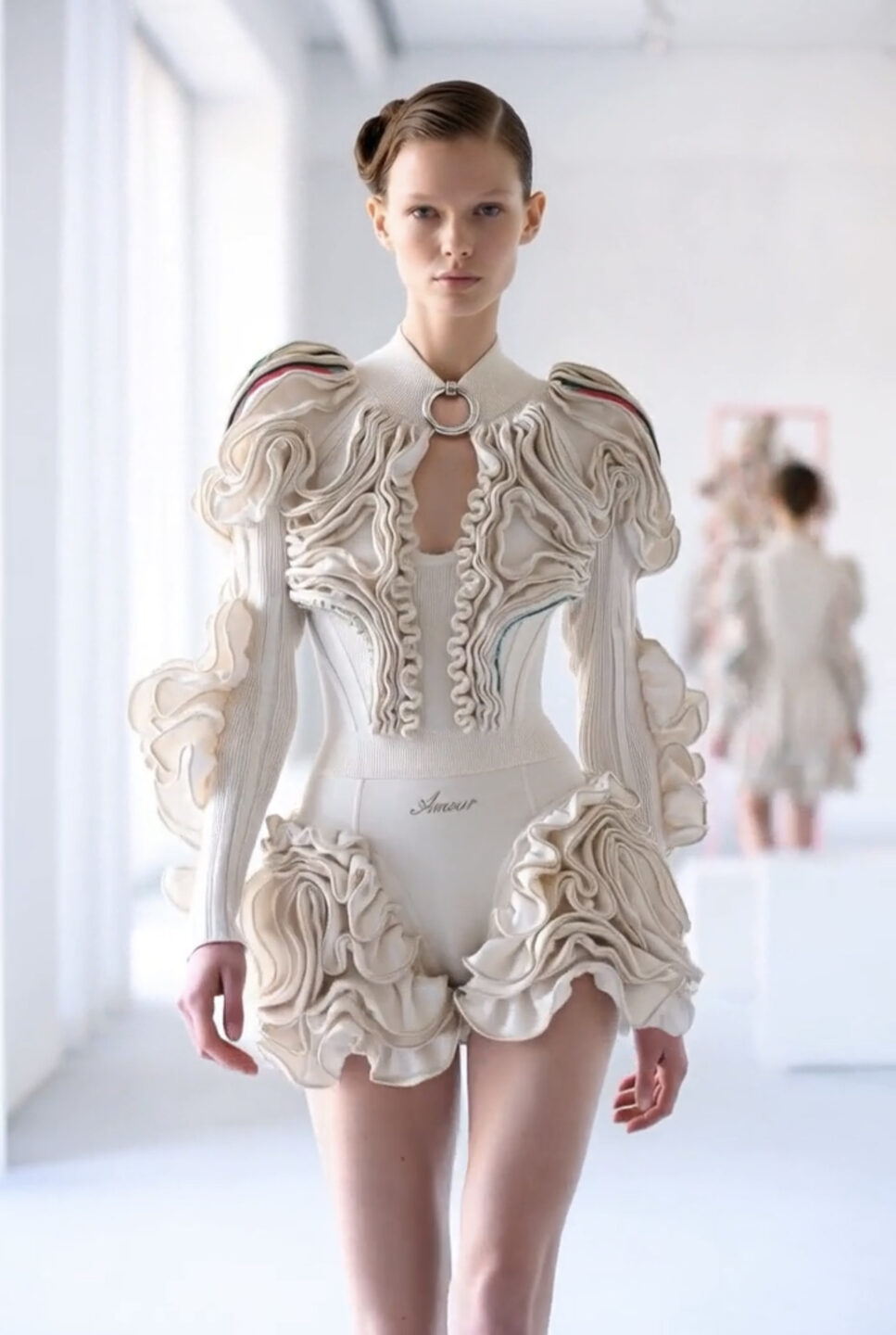
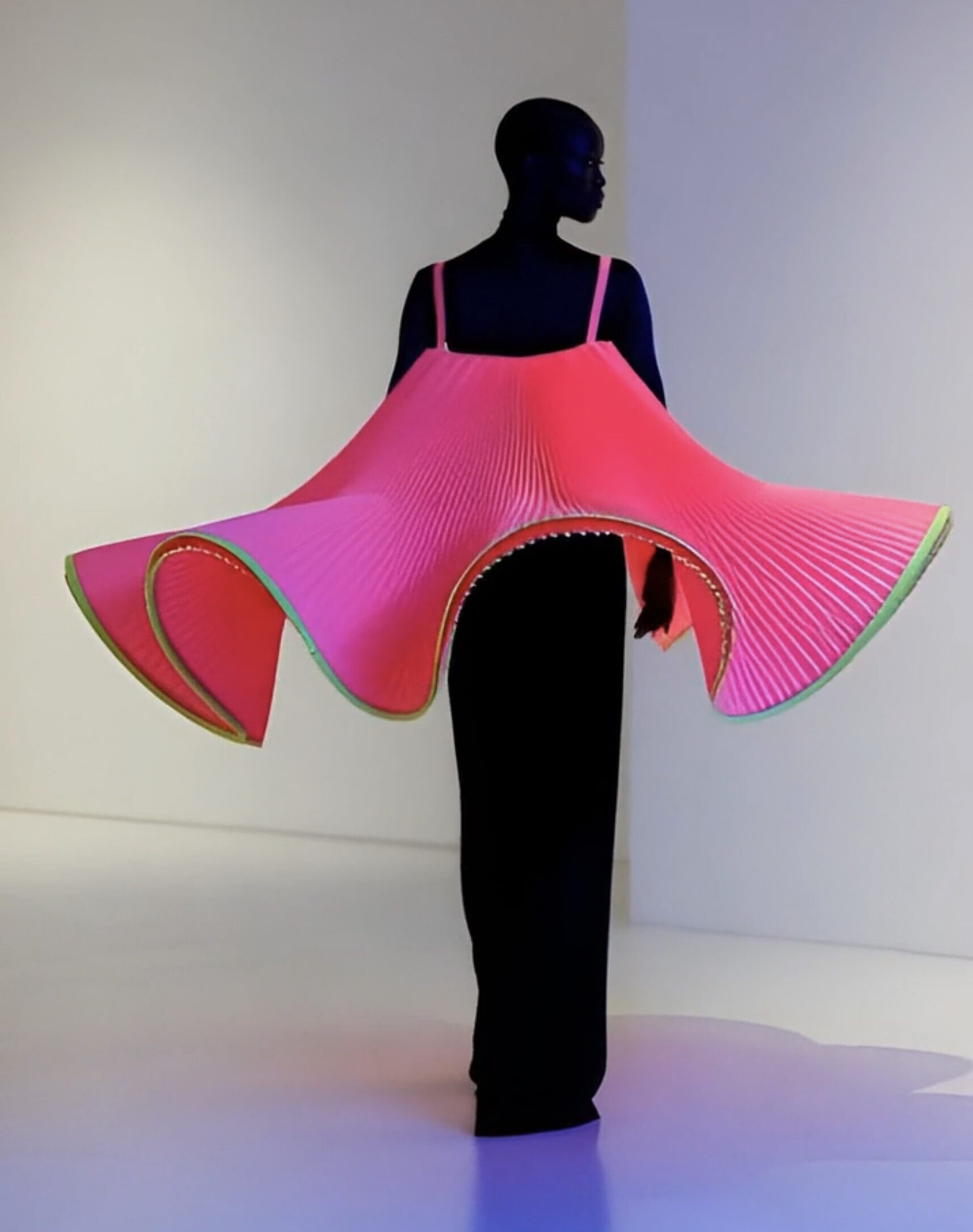
Welcome to the new issue of Club Couture. Today we're talking to Pierre Amour, a French artist who works in fashion with artificial intelligence, turning it into a lab for shapes, volumes and dresses that don't exist yet. Or rather, they do exist: they may not be tangible, but they live in our eyes, and what we can see becomes real in its own way, somewhere between a dream and a runway. We met him at FLA FlavioLucchiniArt Museum, during Fashion Week, where he presented his work FUTURFASHION: THE HIDDEN GENIUS. FLA has always been a place that celebrates talent and, above all, what's new in art, fashion and design, thanks to the vision of those who founded it and those who carry it forward, which made it the perfect home for this work. We had a few questions for him, and this is what he told us.
-Where are you from?
- I’m from Vichy, a small city in the center of France. I later moved to Paris to study and work in fashion, and then to New York, where I’ve been based for over ten years. I often say that Vichy gave me foundation, Paris gave me fashion, and New York gave me freedom..
-What kind of background did you grow up with?
- I grew up in a fairly traditional environment, far from fashion or contemporary art. Creativity was something I found on my own. Maybe because I wasn’t surrounded by the creative industry, imagination became my way of looking beyond what was immediately around me..
-How did you end up choosing your current practice?
- I didn’t really choose it all at once. It evolved. I started as a fashion designer in Paris, then moved to New York and spent years working in couture. Over time, I became increasingly interested not only in the garment itself, but in the world around it—the image, the atmosphere, the emotion, the story. When I discovered AI as a creative medium, it gave me a new kind of freedom. I could explore ideas without immediately thinking about budget, production, gravity or even reality. But my process remains very traditional: concept, experimentation, selection, refinement. The technology changed the possibilities, not the intention..
-How would you describe your style or your work?
- Somewhere between fashion, art and fiction. There is usually something recognizable; a body, a silhouette, a garment; and then something slightly impossible happens. I like contrasts: elegance and disruption, beauty and strangeness, the familiar and the futuristic. I’m interested in making the impossible feel strangely believable.
-What are your main artistic influences?
- They come from everywhere. Couture and fashion construction, of course, but also sculpture, architecture, photography, cinema, painting and music. I’m drawn to Surrealism and to people who create their own visual language. In photography, ...
...I love the provocative style of Guy Bourdin or the theatrical of Tim Walker. I’m also fascinated by artists like Salvator Dalí and designers like Alexander McQueen who transform the body or challenge proportion and perception. Music is another major influence. I often think about images almost musically; in terms of rhythm, repetition, crescendo, tension and silence. But perhaps my biggest influence is the curiosity of putting things together that weren’t necessarily meant to meet.
-What is your relationship with the city of Milan?
- Milan is quite new to my story, which makes the relationship particularly exciting. My work reached Milan before I did. Gisella Borioli discovered it online from across the world, and that connection eventually brought my digital work into a physical exhibition at Superstudio during Milan Fashion Week. I love that journey: something imagined alone on a screen in New York suddenly existing physically in Milan, surrounded by people. There is also something about Milan that resonates with me; the dialogue between fashion, design, art and craftsmanship. It feels sophisticated without needing to shout.
Welcome to the new issue of Club Couture. Today we're talking to Pierre Amour, a French artist who works in fashion with artificial intelligence, turning it into a lab for shapes, volumes and dresses that don't exist yet. Or rather, they do exist: they may not be tangible, but they live in our eyes, and what we can see becomes real in its own way, somewhere between a dream and a runway. We met him at FLA FlavioLucchiniArt Museum, during Fashion Week, where he presented his work FUTURFASHION: THE HIDDEN GENIUS. FLA has always been a place that celebrates talent and, above all, what's new in art, fashion and design, thanks to the vision of those who founded it and those who carry it forward, which made it the perfect home for this work. We had a few questions for him, and this is what he told us.
-Where are you from?
- I’m from Vichy, a small city in the center of France. I later moved to Paris to study and work in fashion, and then to New York, where I’ve been based for over ten years. I often say that Vichy gave me foundation, Paris gave me fashion, and New York gave me freedom..
-What kind of background did you grow up with?
- I grew up in a fairly traditional environment, far from fashion or contemporary art. Creativity was something I found on my own. Maybe because I wasn’t surrounded by the creative industry, imagination became my way of looking beyond what was immediately around me..
-How did you end up choosing your current practice?
- I didn’t really choose it all at once. It evolved. I started as a fashion designer in Paris, then moved to New York and spent years working in couture. Over time, I became increasingly interested not only in the garment itself, but in the world around it—the image, the atmosphere, the emotion, the story. When I discovered AI as a creative medium, it gave me a new kind of freedom. I could explore ideas without immediately thinking about budget, production, gravity or even reality. But my process remains very traditional: concept, experimentation, selection, refinement. The technology changed the possibilities, not the intention..
-How would you describe your style or your work?
- Somewhere between fashion, art and fiction. There is usually something recognizable; a body, a silhouette, a garment; and then something slightly impossible happens. I like contrasts: elegance and disruption, beauty and strangeness, the familiar and the futuristic. I’m interested in making the impossible feel strangely believable.
-What are your main artistic influences?
- They come from everywhere. Couture and fashion construction, of course, but also sculpture, architecture, photography, cinema, painting and music. I’m drawn to Surrealism and to people who create their own visual language. In photography, I love the provocative style of Guy Bourdin or the theatrical of Tim Walker. I’m also fascinated by artists like Salvator Dalí and designers like Alexander McQueen who transform the body or challenge proportion and perception. Music is another major influence. I often think about images almost musically; in terms of rhythm, repetition, crescendo, tension and silence. But perhaps my biggest influence is the curiosity of putting things together that weren’t necessarily meant to meet.
-What is your relationship with the city of Milan?
- Milan is quite new to my story, which makes the relationship particularly exciting. My work reached Milan before I did. Gisella Borioli discovered it online from across the world, and that connection eventually brought my digital work into a physical exhibition at Superstudio during Milan Fashion Week. I love that journey: something imagined alone on a screen in New York suddenly existing physically in Milan, surrounded by people. There is also something about Milan that resonates with me; the dialogue between fashion, design, art and craftsmanship. It feels sophisticated without needing to shout.
-If you were a object?
- A mirror. It changes depending on who is looking.
-If you were a city?
- New York. Restless, contradictory, imperfect and constantly reinventing itself.
-If you were a geometric shape?
- A circle. No real beginning or end.
-If you were a food?
- A mille-feuille. French, layered, slightly complicated… and a little messy when you get into it.
-What would be your music for the Couture Club?
- I chose “Amour Interdit,” one of my own songs. Music has become another part of my creative practice; a way of expressing feelings beyond the visual. I like the tension suggested by the title: desire, boundaries, and the temptation to cross them. It connects with what often draws me to fashion and art; something beautiful that unsettles you a little. Sharing my own music felt like a more personal way to introduce myself.
-If you were a object?
- A mirror. It changes depending on who is looking.
-If you were a city?
- New York. Restless, contradictory, imperfect and constantly reinventing itself.
-If you were a geometric shape?
- A circle. No real beginning or end.
-If you were a food?
- A mille-feuille. French, layered, slightly complicated… and a little messy when you get into it.
-What would be your music for the Couture Club?
- I chose “Amour Interdit,” one of my own songs. Music has become another part of my creative practice; a way of expressing feelings beyond the visual. I like the tension suggested by the title: desire, boundaries, and the temptation to cross them. It connects with what often draws me to fashion and art; something beautiful that unsettles you a little. Sharing my own music felt like a more personal way to introduce myself.